Read more about the inspiration behind the artwork wrote by the Friends of Low Hall Nature Reserve:
“The Wheel of the Year is a modern Pagan seasonal calendar with eight festivals marking turning
points in the year. Four align with the solstices and equinoxes; four fall between them. It offers a way to notice recurring changes in daylight, weather, plant growth and harvest and, for many practitioners, to celebrate or reflect on those changes. The Wheel brings together festivals with varied historical roots; not every Pagan follows it in the same way.
In the Northern Hemisphere, the cycle is commonly shown as: Yule (winter solstice), Imbolc (early signs of spring), Ostara (spring equinox), Beltane (spring giving way to summer), Litha (summer solstice), Lughnasadh/Lammas (first harvest), Mabon (autumn equinox) and Samhain (late autumn and the approach of winter). The dates and seasonal cues vary by region.
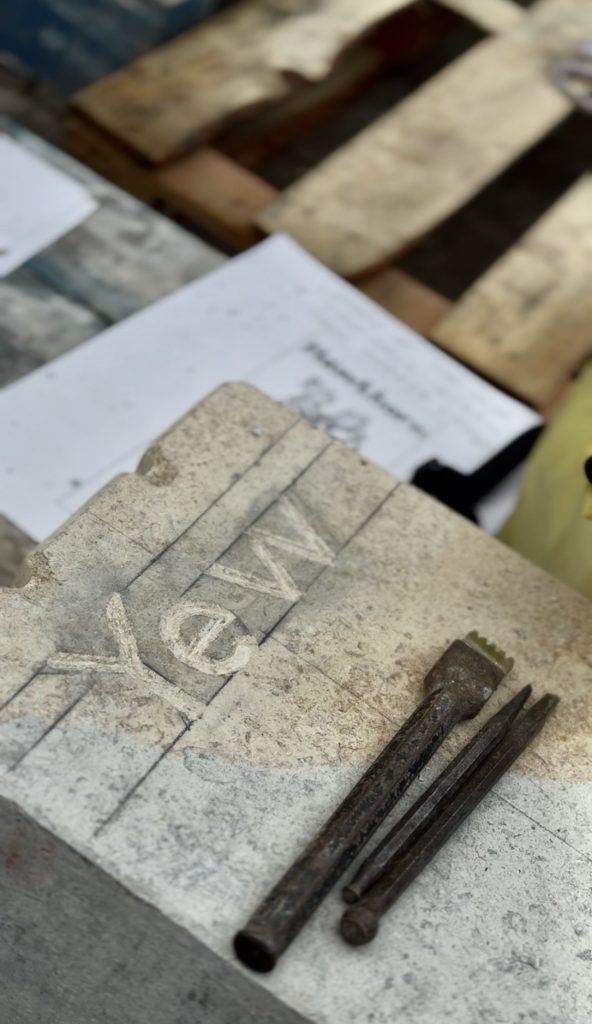
Trees can make the seasonal story tangible – for example, evergreens in winter, budding branches in spring, leafy canopies in summer and fruit or falling leaves in autumn. Tree associations are symbolic, not a single fixed or historically universal set. The image uses one illustrative set: pine for Yule, birch for Imbolc, willow for Ostara, hawthorn for Beltane, oak for Litha, hazel for Lamas, apple for Mabon and yew for Samhain. Practitioners and local traditions may choose different trees; observing what actually grows and changes where you live can be part of the learning.
We hope to use the space to celebrate and recognise the seasons and be closer to nature. Forest bathing, yoga, mindfulness, studying and teaching flora and fauna etc. and a meeting place for multiple uses.“